
Disclaimer The Thunder Bay District Health Unit supports mental health in a variety of ways across our programs. We do not, however, provide acute crisis or mental health services or counselling. If you or someone you know is experiencing a mental health crisis:
To find out where you can access counselling support and treatment for mental health concerns:
|



After having a baby, it's completely normal for a person to experience a whirlwind of emotions. In fact, up to 85% of people who give birth experience what's known as the "baby blues"—feelings of sadness, moodiness, or being overwhelmed. These emotions usually begin 3–5 days after birth and often ease within one to two weeks.
If these feelings last longer than two weeks, become more intense, or start to interfere with daily life, it may be a sign of something more serious. The person may be experiencing a Perinatal Mood & Anxiety Disorder (PMAD).
The most important thing to know is: you are not alone, and help is available.
In Canada, 1 in 4 women and 1 in 10 men will experience a PMAD. In 2022, over 50% of pregnant individuals in Thunder Bay and District reported a mental health concern during pregnancy.
A person experiencing a PMAD is not to blame—these conditions are common, treatable, and nothing to be ashamed of. Reaching out early for support can make a big difference. If you’re not feeling like yourself, don’t wait—talk to your doctor, midwife, or another trusted healthcare provider.
If you’re having thoughts of harming yourself or your baby, call 911 or your local crisis line right away (see above). Your safety is important.
What are Perinatal Mood and Anxiety Disorders?
Perinatal mental health refers to a person's emotional well-being during pregnancy, after childbirth, and throughout the first year of parenting.
Perinatal Mood & Anxiety Disorders (PMADs) are the most common complications related to pregnancy and the postpartum period.
PMADs can develop at any time during pregnancy, after childbirth, or within the first year postpartum and can vary in symptoms and severity.
They can affect anyone, including:
- People who have given birth
- Non-birthing partners
- Individuals who have experienced pregnancy loss
Common types of PMADs include:
- Postpartum Depression (PPD)
- Postpartum Anxiety (PPA)
- Panic Disorder
- Obsessive-Compulsive Disorder (OCD)
- Postpartum Post-Traumatic Stress Disorder (PTSD)
- Bipolar Disorders
- Postpartum Psychosis (rare but very serious emergency)
Baby Blues vs. PMADs: What’s the Difference?
Baby Blues | Perinatal Mood and Anxiety Disorders |
|---|---|
| Affects up to 80% of new parents | Affects about 15–20% of new parents |
| Starts a few days after birth | Can start any time during pregnancy or up to 1 year postpartum |
| Mild mood swings, crying, irritability | More intense emotions like hopelessness, rage, or fear |
| Lasts 1–2 weeks | Persists beyond 2 weeks or worsens over time |
| Resolves without treatment | Often requires additional support or treatment |
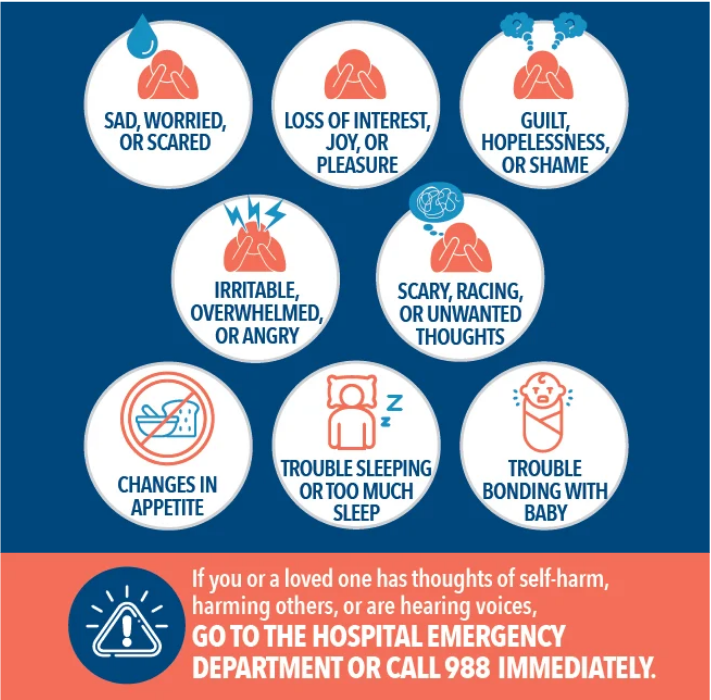
Common Signs and Symptoms of PMADs
Learn more about the specific symptoms and risk factors for each of the perinatal mental health conditions that can affect individuals during pregnant and postpartum, as well as their partners and families, at Postpartum Support International.
Postpartum Psychosis: A Medical Emergency
Perinatal Psychosis (PPP) is a rare but serious mental health condition that typically begins within the first two weeks postpartum, though it can develop up to a year after birth. It affects about 1–2 out of every 1,000 births and is considered a medical emergency requiring immediate treatment.
PPP involves a break from reality, and while most individuals are not violent, there is a serious risk of harm to oneself or others (including the infant) due to impaired judgment, as delusions and/or hallucinations can feel intensely real to the person experiencing them.
Immediate professional help is crucial. PPP is temporary and treatable.
Symptoms may include:
- Delusions or strange beliefs
- Hallucinations
- Agitation or hyperactivity
- Severe depression or emotional numbness
- Insomnia or reduced need for sleep
- Paranoia
- Rapid mood swings
- Communication difficulties
What to do if you think someone is experiencing PPP:
Stay with the person and their child to ensure safety. Call a healthcare provider or crisis hotline immediately. You don’t need a formal diagnosis to seek help.
Learn more at Postpartum Support International.
When to Speak With a Health Care Provider
You should speak to your doctor, nurse, or midwife if:
- Your symptoms last more than two weeks
- Your emotions interfere with daily life or caring for your baby
- You feel anxious, detached, or unlike yourself
- You have any thoughts of self-harm or harming your baby
Treatment and Support
There are many ways a person can find support and start to feel better.
Self-Care and Strategies for Well-Being
NESTS stands for 5 basic steps that can help you feel better and support your mental, physical, and emotional health.
NESTS stands for:
- N – Nutrition: Eat healthy foods.
- E – Exercise: Move your body in safe ways.
- S – Sleep: Get enough rest.
- T – Time for yourself: Take breaks and do things you enjoy.
- S – Support: Ask for help from friends, family, or professionals.
Taking small, manageable NESTS steps can help you start to feel better. Choose what feels right for you:
- Rest when you can - even short breaks or quiet moments can help, even if you don’t fall asleep.
- Try to keep a simple daily rhythm – routines can offer comfort.
- Focus on only one or two tasks a day – it’s okay to let the rest wait.
- Care for your body – shower, get dressed, eat nourishing meals, and move your body when you're able.
- Make time for things that bring you joy - connect with a friend, spend time outdoors, read something you enjoy, or return to a hobby that feels good.
- Savour the good moments – even small moments of connection with your baby are meaningful.
- Be kind to yourself – adjusting to parenthood is hard.
- Explore self-guided supports – books, apps, or online tools can help you better understand and navigate your feelings.
- Try calming practices – such as deep breathing, journaling, gentle movement, meditation, yoga, or listening to music.
Try this NESTS tool to write down some steps you can take!
Therapy
Talking with a mental health professional can be a helpful and healing experience.
- Consider individual therapy to explore how you’ve been feeling.
- Join a support group designed for perinatal mental health, like the Postpartum Mood Difficulties Group Therapy.
Medication
Medication can sometimes be helpful as part of a person’s care plan.
- There are options available that the evidence shows are safe during pregnancy and while breastfeeding.
- Always speak with your healthcare provider before starting, stopping, or changing any medications.
- Take medications exactly as directed, and talk with your provider about any questions or concerns.
Peer and Community Support
Staying connected with others can be an important part of healing.
- Talk to people you trust—like family, friends, care providers, or community groups like Babies’ Day Out.
- Accept or ask for help—you don’t have to do everything on your own.
- Connect with others who’ve had similar experiences.
- Share how you’re feeling with someone you trust.
- Reach out for help with things that impact your mental health, like housing, finances, or caregiving stress.
See perinatal mental health supports down below for more specific support options!
How Family and Friends Can Help
Early and active involvement in a loved one's recovery significantly benefits everyone. Understanding what the person is going through helps them feel supported, which can speed up her healing. You don’t need to fix everything — just being there makes a big difference! Learn more at Postpartum Support International.
Here are some simple, meaningful ways to support someone during pregnancy or after birth:
Understand
- Learn the signs and symptoms of perinatal mood and anxiety disorders.
- Remember, these are real medical conditions — not anyone’s fault.
Offer Practical Help
- If they’re unsure of what help they need, gently offer suggestions.
- Help with meals, cleaning, or baby care — don’t wait to be asked.
- Make sure they’re eating, drinking water, and getting rest.
- Find more tips here
Show Encouragement
- Reassure them: “You’re doing a great job,” “I’m here for you.”
- Send a kind message just to check in.
- Notice and praise small wins — like getting out of bed or showering.
Keep Communication Open
- Be clear about when you’ll be home/over and stick to it.
- If feelings get intense, it’s okay to take a break but be sure to talk later.
Listen with Care
- Let them know they’re not alone and that they deserve support.
- Offer a listening ear without judgment or interruption.
Have Realistic Expectations
- Just because they’re home all day doesn’t mean they have the energy for all household tasks.
- Be patient if your partner is not ready for sex — low sex drive is common with mental health challenges. Rest and support will help with recovery.
Help Them Find Support
- Encourage them to talk to a doctor, therapist, or counselor.
- Offer to help find options, book appointments, or go with them.
Take Care of Yourself, Too
- Supporting someone else can be hard; becoming a new parent can be hard; change can be hard — make sure you’re also taking breaks and getting support.
Fathers and Partners who are Struggling with Their Perinatal Mental Health
Around 10% of men and partners experience postpartum depression between early pregnancy and one year after birth. The risk is higher—up to 50%—if their partner also has mental health challenges. Fathers and partners with a history of mental illness are especially at risk. Stress from adjusting to parenthood, relationship changes, and financial pressures can contribute.
DadCentral
This free to download new dad manual provides 24/7 crib-side assistance and covers dad’s mental health.
Heads Up Guys
This men’s mental health resource speaks about Becoming a Dad and Maintaining Your Mental Health.
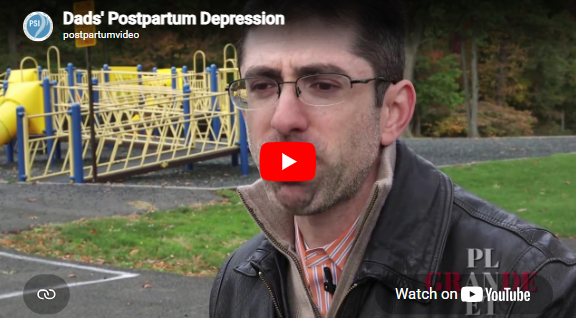
Help for Dads
Postpartum Support International provides support for navigating new-parent stress, anxiety, or depression in a safe space to share experiences with other dads.
Pacific Post Partum Support Society
Pacific Post Partum Support Society offers telephone and text support to partners and non-birthing parents. We also offer Partner and Couple Information and Support Sessions.

Perinatal Mental Health Support
Self-help Workbooks and Discussion Tools
A free CBT-based workbook designed to help expectant and new parents manage depression. Includes self-assessment tools, thought-challenging exercises, and healthy lifestyle strategies to support mental well-being during pregnancy and postpartum.
Coping with Depression during Pregnancy and Following the Birth
A free CBT-based self-help guide for pregnant and postpartum women. Offers psychoeducation on perinatal depression, introduces the NEST‑S self‑care plan (Nutrition, Exercise, Sleep, “Time for yourself,” Support), and includes structured activities—goal-setting, thought-challenging, problem-solving, relapse-prevention—plus handy worksheets like the EPDS and guided handouts.
A free, patient‑focused companion to CANMAT’s 2024 perinatal mental‑health guidelines. Offers clear, supportive advice for expectant and new parents—covering symptom recognition, self‑care strategies, emotional support, and evidence‑based treatment options for mood and anxiety challenges during pregnancy, postpartum and the first year after birth.
The Pregnancy & Postpartum Anxiety Workbook
A CBT‑based self-help guide for managing anxiety, worry, panic, obsessions, and compulsions during pregnancy and postpartum. Offers psychoeducation on perinatal anxiety, practical tools like relaxation training, thought-challenging, problem-solving, exposure techniques, and includes sections for fathers. Designed to help new parents regain calm and confidence during this transformative time.
Perinatal Mental Health Discussion Tools
Talking about perinatal mental health can be challenging — use these discussion tools from Postpartum Support International to help you better understand what you're feeling and start the conversation with your healthcare provider.
A practical, easy-to-use guide to help expectant parents prepare for life after birth. Covers emotional wellbeing, sleep, support systems, household tasks, and recovery. Created by Postpartum Support International to promote confident, supported transitions into parenthood.
Peer and Community Support
211 is a helpline that easily connects people to the social services, programs and community supports they need.
Healthy Babies Healthy Children Program
The Healthy Babies Healthy Children Program at the Thunder Bay District Health Unit has public health nurses and family home visitors that can support you. Learn more by calling (807) 625-5900 and ask to speak with a public health nurse in the Healthy Babies Healthy Children program.
Having a Baby in Thunder Bay Booklet
A comprehensive directory of community programs, emergency helplines, and support services covering pregnancy through postpartum. Includes resources for general information, pregnancy and postnatal care, car seat safety, breastfeeding and lactation, oral health, parenting, child care, cultural support, basic needs, shelter and family violence, crisis intervention, and mental health and substance use.
Group Therapy
Postpartum Mood Difficulties Group Therapy
Maternal mental health group therapy provided by St. Joseph's Care Group Mental Health Outpatient Program. The therapy group is for pregnant women who are having mental health difficulties or for women experiencing mood changes after baby. Women who have attended this group have given great feedback and reported fewer symptoms after completing the group therapy.
Postpartum Support Group – Offered in-person, twice per month on Thursday morning from 9:30 am – 11:30 am. Call: 807-346-6863 to register.
An 8-week online support group run by the Mental Health Program at Women’s College Hospital. It will take place on a confidential discussion board, giving you the opportunity to share your thoughts, feelings, and experiences, while learning from and supporting other mothers. Each week a new topic will be explored, relating to issues that commonly emerge during the first year of life with a new baby.
Help lines
Provides mental health and substance use support, referrals across Ontario, including perinatal mental health resources.
Helpline: 1-866-531-2600 (24/7)
Text: Text “CONNEX” to 247247
Canada Suicide Prevention Service (CSPS)
Crisis support including for perinatal mental health emergencies.
Phone: 1-833-456-4566 (24/7)
Text: 45645 (4 p.m. – midnight ET)
Connects to local community resources including perinatal mental health support and parenting programs.
Dial or Text 211
4 hours a day, 7 days a week
Pacific Post Partum Support Society (PPPSS)
Confidential peer support for pregnant individuals and parents of children under 3 experiencing perinatal mental health challenges.
Phone & Text: 604-255-7999 or Toll-free 1-855-255-7999
Monday to Friday, Phone 10:00 AM–3:00 PM PT, Text 10:30 AM–2:30 PM PT
Postpartum Support International (PSI)
Offers support, information, and referrals for perinatal mood and anxiety disorders.
Connects individuals with local support groups and trained volunteers across Canada.
Phone: 1-800-944-4773 (US/Canada toll-free)
Mental Health Providers
The Maternity Centre offers free social work support and many other no-cost services to help you. Call 807-684-6228 ext. 0 to book an appointment.
Visit our website to find a listing of all available no-cost mental health supports and services in Thunder Bay.
Find a listing of mental health providers in Thunder Bay who have specialized training in perinatal mental health through Postpartum Support International. These providers charge a fee for their services; however, private benefits may help cover the cost.
Pregnancy and Infant Loss
Pregnancy and Infant Loss Network (PAIL Network)
Pregnancy and Infant Loss Network (PAIL Network) is dedicated to improving bereavement care and providing support to families who have suffered the loss of a pregnancy or the death of their baby/babies. We are a provincial program that operates as a part of Sunnybrook Health Sciences Centre‘s DAN Women and Babies program. Support services have been tailored to meet the specific needs of grieving families, and are available at no cost to all families in the province of Ontario.
Perinatal Mental Health Awareness Events in Thunder Bay
Flora’s Walk for Perinatal Mental Health
The Thunder Bay Perinatal Coalition holds Flora’s Walk for Perinatal Mental Health every year around Maternal Mental Health Day on May 1st. This event brings together individuals, families, and professionals to raise awareness about perinatal mental health, providing a platform for shared stories, resources, and support.
Additional Resources
Postpartum Support International (PSI)
- Provider Directory
- Chat with an Expert
- Peer Mentor Program
- Online Support Meetings
- Postpartum Planning
- Specialized Support Resources
PSI provides support resources for:
- Moms
- Dads
- Partners and Families
- Queer & Trans Parents
- Military Families
- Postpartum Psychosis
- Loss & Grief
- Adoptive Parents and Birth Mothers
Society of Obstetricians and Gynaecologists of Canada
FAQ on Mental Health During Pregnancy and Postpartum
This “At-a-Glance” flyer provides a clear overview of perinatal mental health disorders, including common symptoms, risk factors, and available treatment options — all in one easy-to-read guide.
Your Guide to a Healthy Pregnancy
Your Guide to Postpartum Health and Caring for your Baby
Sources:
Centre for Addiction and Mental Health (CAMH)
Postpartum Support International
Pacific Post Partum Support Society
Society of Obstetricians and Gyneacologists of Canada
Centre for Addiction and Mental Health
Best Start by Health Nexus
Public Health Ontario
Canadian Network for Mood and Anxiety Treatments
Public Health Agency of Canada
Pregnancy and Infant Loss Network
Women’s College Hospital
Perinatal Services BC